

Tooth loss is a common issue that affects millions of people worldwide due to ageing, injury, or dental diseases. Choosing the right tooth replacement option is crucial for maintaining oral health, restoring functionality, and enhancing overall quality of life. The two most common solutions available today are dental implants and dentures, both of which have their own benefits and considerations. Dental implants provide a permanent, natural appearance, whereas dentures are a less expensive and less invasive option. In this blog, we will discuss the main differences between dental implants and dentures so that you can decide what will work best for your individual needs.
Understanding Dental Implants
Dental implants are a long-term solution for tooth replacement that involves surgically placing a titanium post directly into the jawbone. The post acts as a substitute for a root giving support to a crown or bridge. However, the implant integrates with the jawbone using a process known as osseointegration, supporting stability and durability.
Procedure Overview:
- First Consultation: The dentist evaluates the patient’s oral health, jawbone density, and general suitability for implants using X-rays and other CBCT.
- Treatment Planning: A personalized treatment plan is developed, outlining the course, healing time, and any preparation procedures like bone grafting if the jawbone is not strong enough.
- Surgical Placement: With local anaesthesia or sedation, a titanium post is inserted into the jawbone through a surgical procedure. The gum is then sewn back, and the implant has time to fuse with the bone.
- Healing Time: During the next three to six months, the jawbone gradually fuses with the implant through osseointegration providing a solid base for the prosthetic tooth.
- Abutment Placement: After healing is finished, an abutment (connector) is fitted to the implant to secure the permanent crown.
- Crown Placement: A specially fabricated crown, matching the colour and shape of the natural teeth is firmly positioned on the abutment thus finishing the restoration.
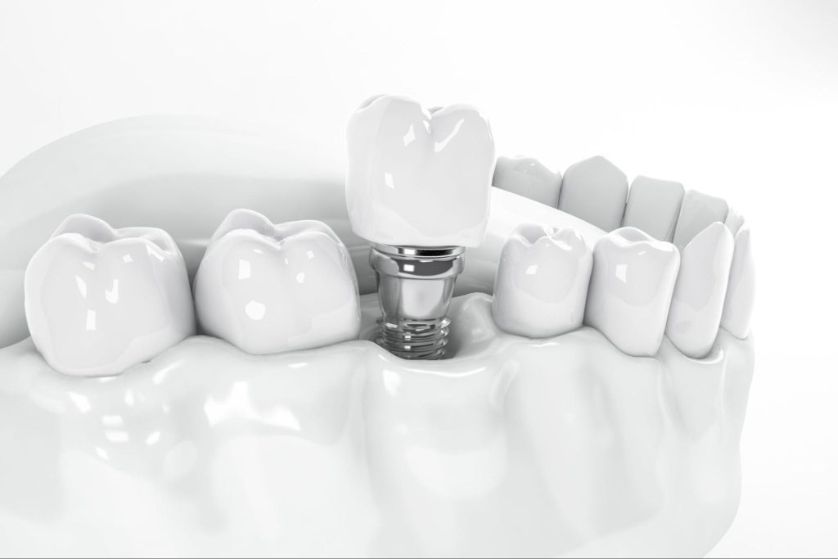
Pros of Dental Implants:
- Longevity and durability: Can last a lifetime with proper care.
- Natural appearance and feel: Mimics real teeth in both function and aesthetics.
- Jawbone preservation with implants: Prevents bone loss and maintains facial structure.
Cons of Dental Implants:
- Increased initial cost: Needs an intensive financial investment.
- Surgical procedure needed: Minor surgery and recovery time.
- Not appropriate for every patient: Patients with a lack of bone density can require bone grafting.
Understanding Dentures
Dentures are removable dental appliances to restore missing teeth and tissues around them. There are two general types based on the degree of tooth loss.
Types of Dentures:
Complete Dentures: Employed when all teeth in one arch are missing. They are a complete set of artificial teeth mounted in an acrylic base that is similar to natural gums. They rely on suction and sometimes adhesives to stay in place and are designed to restore function and aesthetics.
Partial Dentures: For patients who retain some of their natural teeth. They are made up of a framework that holds the replacement teeth in place and clasps the remaining natural teeth for support. Partial dentures ensure proper alignment and avoid the movement of remaining teeth.
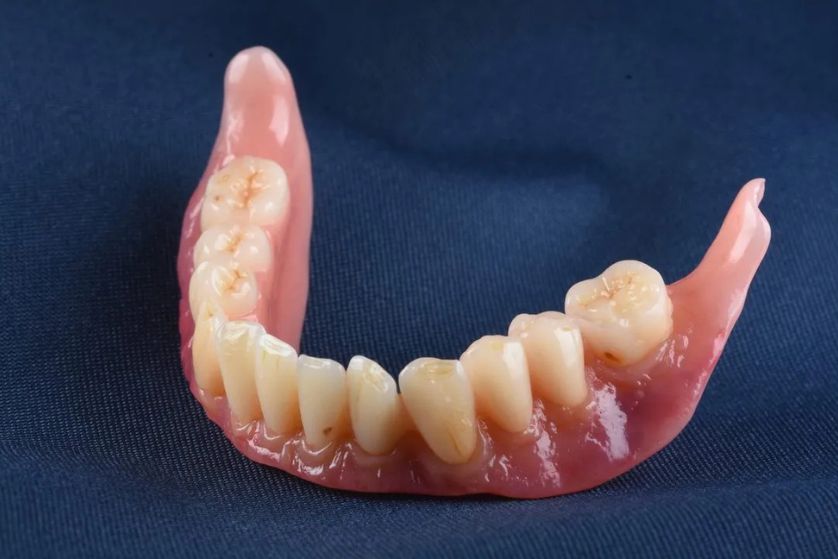
Pros of Dentures:
- Less expensive initially: Less expensive than implants.
- Non-invasive method: No surgical intervention is involved, so more patients can use it.
- Appropriate for patients with unhealthy or weak jawbones: Best for those who might not be suitable for implants.
Cons of Dentures:
- Risk of discomfort or slipping: Can shift during talking or eating.
- Needs periodic adjustments: Fit changes over time because of jawbone resorption.
- May impact speech and eating: Adaptation period required.
- Does not inhibit loss of jawbone: Resorption of bone can cause changes to facial structure.
Comparative Analysis: Dental Implants and Dentures
Cost of dental implants vs. dentures
- Dental implants require a higher initial investment but are more cost-effective in the long run due to their durability.
- Dentures have a lower cost but may require frequent adjustments and replacements over time, leading to additional expenses.
Procedure and Timeframe:
- Dental implants are a surgical procedure that takes several months to heal and integrate with the jawbone.
- Dentures are not surgical and can be fitted in a relatively shorter time, so they are a faster tooth replacement solution.
Maintenance and Care:
- Dental implants act like natural teeth and need daily brushing, flossing, and regular dental check-ups.
- Denture maintenance tips include daily cleaning, proper storage, and occasional adjustments to ensure a perfect fit and long-lasting function.
Aesthetics and Comfort:
- Dental implants offer a more natural look and feel. They are stable and do not shift or slip while eating or speaking.
- Dentures take time to adjust, and at times will shift in the mouth, resulting in possible discomfort or speech impediments.
Consultation and Decision-Making
Dental implants versus dentures is a major choice that is based on several factors such as oral health, lifestyle and budget. It is important to consult with a dental specialist in order to evaluate personal needs and decide the most appropriate course of action. At Sterling Dental Clinic, Vasant Vihar, Delhi our skilled dental experts offer individualized consultations to enable you to make an informed decision. Book a consultation today to discuss the best tooth replacement option for you.
Conclusion
Both dentures and dental implants are efficient ways to replace missing teeth, each having its own benefits and disadvantages. While implants are a permanent, natural-looking solution that maintains jawbone health, dentures are more accessible and less invasive. Individual needs, Oral health and tooth replacement status, and personal preference determine the appropriate option. Knowing the advantages and disadvantages and consulting with a dental professional allows you to make the most informed decision to rebuild your smile and enhance your quality of life.