
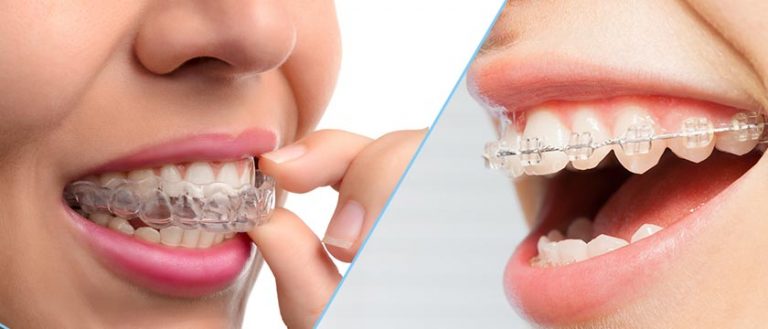
There are five main types of braces for teeth: traditional metal braces, ceramic (tooth-coloured) braces, self-ligating braces, lingual braces fitted behind the teeth, and clear aligners such as Invisalign. All of them move teeth with gentle, steady pressure over months. They differ in how visible they are, how they feel, how easy they are to clean and which bite problems they handle best, so the right choice depends on your teeth as much as your preference.
How do orthodontic braces work?
Braces apply a light, continuous force to the teeth. The bone around each tooth slowly remodels in response, letting the tooth move into a new position. With fixed braces, small brackets are bonded to the teeth and joined by an archwire that the orthodontist adjusts or changes at review visits. With clear aligners, each tray is shaped slightly differently from the last, and you move to the next tray on a schedule.
Whatever type you choose, the result is held in place afterwards with retainers, because teeth tend to drift back if nothing keeps them there.
1. Metal braces (traditional braces)
Traditional braces use small stainless steel brackets on the front of each tooth, connected by a wire. The wire is usually held in each bracket with a tiny elastic tie, which can come in clear or coloured options.
- Pros: strong and dependable, suitable for a very wide range of problems, including more complex bite corrections. Usually the most economical fixed option.
- Cons: the most visible type. Brackets can feel rough on the lips and cheeks for the first week or two.
- Who it suits: children and teenagers, and adults who are more concerned with the result than with how the braces look.
2. Ceramic braces (clear or tooth-coloured braces)
Ceramic braces work in the same way as metal braces, but the brackets are made of a tooth-coloured or translucent ceramic, so they blend in with the teeth. Some use a white or tooth-coloured wire too.
- Pros: much less noticeable from a normal speaking distance, while still being fixed braces that handle many kinds of movement.
- Cons: brackets are slightly larger and more brittle than metal ones. Elastic ties can pick up stains from tea, coffee, turmeric and similar foods between visits. They usually cost more than metal braces.
- Who it suits: adults and older teenagers who want fixed braces that are discreet.
3. Self-ligating braces
Self-ligating braces have a small built-in clip or door on each bracket that holds the wire, instead of an elastic tie. They are available in metal and in tooth-coloured versions.
- Pros: no elastic ties to stain or collect plaque, which can make cleaning a little easier. Some people find them more comfortable, and adjustment visits can be quicker.
- Cons: they still sit on the front of the teeth, and they may cost more than conventional braces. How fast teeth move depends far more on the case than on the bracket type.
- Who it suits: most people who are suitable for fixed braces and prefer a system without elastic ties.
4. Lingual braces (inside braces)
Lingual braces are bonded to the inner surfaces of the teeth, facing the tongue, so they cannot be seen when you smile. The brackets are usually custom-made for each tooth.
- Pros: hidden from view, which appeals to people whose work involves meeting others face to face.
- Cons: they can feel uncomfortable on the tongue and may affect speech for the first few weeks. Cleaning is harder, adjustments take longer and they are usually among the more expensive options. Not every case or every clinic is suited to them.
- Who it suits: adults who want fixed braces that are not visible and who are prepared for an adjustment period.
5. Clear aligners (such as Invisalign)
Clear aligners are not braces in the traditional sense. Instead of brackets and wires, you wear a series of thin, transparent trays made from a digital scan of your teeth. Small tooth-coloured bumps called attachments are often bonded to some teeth to help the trays grip and guide movement.
- Pros: nearly invisible, and removable for eating, brushing and flossing, so there are no food restrictions. No wires to poke the cheeks.
- Cons: they only work while you are wearing them, usually most of the day and night, so they depend on discipline. They need to be taken out for every meal and the teeth cleaned before putting them back. Some complex movements may be better handled with fixed braces.
- Who it suits: adults and responsible teenagers with suitable cases who want a discreet, removable option.
Which type of braces is best for you?
There is no single best type of braces. The right one is the one that can correct your particular problem and that you will be able to look after properly. Things the orthodontist will weigh up with you:
- Your bite: some problems, such as larger bite corrections, may be handled more predictably with fixed braces.
- Appearance: how much the visibility of the braces matters to you at work, college or socially.
- Lifestyle and discipline: aligners need to be worn consistently. Fixed braces work all the time but need careful cleaning and some food changes.
- Age: for growing children, the orthodontist may also use other appliances to guide jaw growth.
- Budget: fees differ between types and between cases. Ask for a written estimate that includes reviews and retainers.
A specialist orthodontist will examine you, take records such as photographs, X-rays and scans, and explain which options are suitable before you decide. Our guide on how to choose an orthodontist lists the questions worth asking.
Types of braces in India: what is commonly available?
Metal, ceramic and self-ligating braces and clear aligners are widely available from orthodontists across Indian cities. Lingual braces are offered by fewer practices because they need special training and laboratory work. Several aligner brands are available, and the brand matters less than careful planning and supervision by an orthodontist throughout treatment.
Caring for your teeth with braces
Good care keeps your teeth and gums healthy and helps treatment stay on track.
With fixed braces
- Brush carefully after meals, around and under each bracket, with fluoride toothpaste.
- Use interdental brushes or floss threaders to clean between teeth and under the wire.
- Avoid hard and sticky foods, such as nuts, hard sweets, toffees and chewing gum, and cut foods like apples and corn into small pieces.
- Use orthodontic wax if a bracket rubs your cheek, and contact your orthodontist if a bracket comes loose or a wire pokes.
- Wear a mouthguard for contact sports.
With clear aligners
- Wear them for the hours your orthodontist recommends, and take them out only to eat, drink anything other than plain water, and clean.
- Brush your teeth before putting the aligners back in, so food is not trapped against the teeth.
- Clean the trays gently with cool water and keep them in their case, never wrapped in a napkin.
With any type, keep up regular dental check-ups and cleanings during treatment.
Braces and aligners at Sterling
At The Sterling Dental Clinic in Vasant Vihar, New Delhi, orthodontic treatment is planned by an orthodontist, Dr. Anurag Bhagat. The clinic offers Invisalign clear aligners, SmartClip self-ligating braces and aesthetic braces with translucent brackets. You can read more on the clear aligners and braces page, or contact the clinic to book an orthodontic consultation.
Common questions
What are the different types of braces for teeth?+
The main types are metal braces, ceramic or tooth-coloured braces, self-ligating braces with built-in clips, lingual braces fixed behind the teeth, and clear aligners such as Invisalign. The first four are fixed to the teeth. Aligners are removable trays. Your orthodontist will tell you which of them are suitable for your bite.
Which type of braces is the least noticeable?+
Lingual braces are hidden behind the teeth, and clear aligners are nearly invisible when worn. Ceramic braces are on the front of the teeth but blend in with their colour. Which of these you can have depends on your case, how complex the movements are, and how comfortable you are with the care each type needs.
Do braces hurt?+
Most people feel pressure and some tenderness for a few days after braces are fitted or adjusted, or when starting a new set of aligners. Soft foods help, and your dentist can advise on suitable pain relief. Cheeks and lips usually get used to brackets within a week or two. Sharp or lasting pain should be checked by your orthodontist.
What foods should I avoid with braces?+
With fixed braces, avoid hard, sticky and chewy foods such as nuts, hard sweets, toffee, chewing gum and hard crusts, which can break brackets or bend wires. Cut fruit, corn and similar foods into small pieces. With aligners there are no food rules because you remove them to eat, but brush before putting them back in.
Can adults get braces?+
Yes. Teeth can be moved at any age provided the gums and supporting bone are healthy, so a check of your gums comes first. Many adults choose ceramic braces, self-ligating braces or clear aligners because they are discreet. Your orthodontist will explain whether your bite needs any particular type.
This article is general information, not a diagnosis. Your own treatment plan is agreed after an examination at the clinic.