
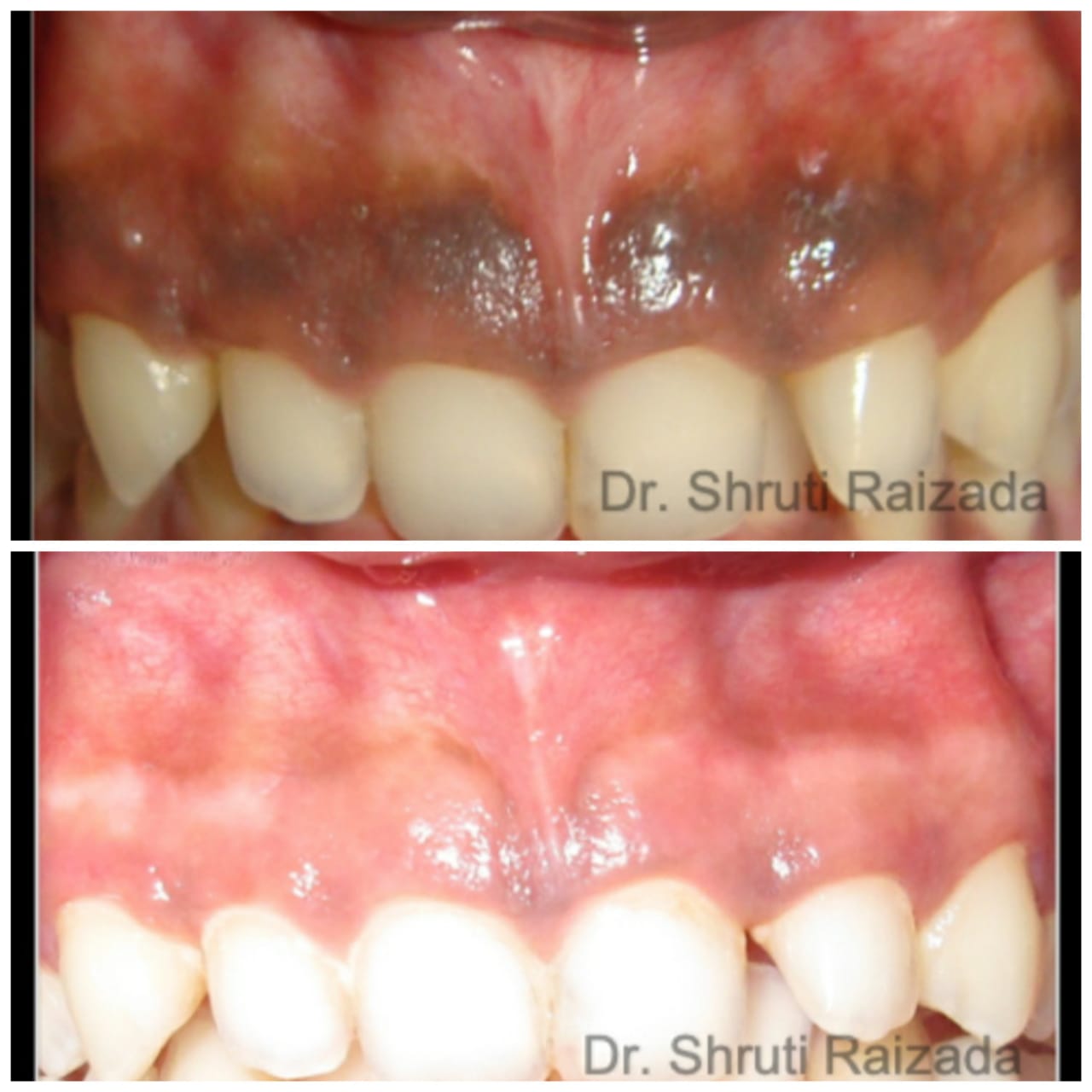
Brown gums in kids are usually completely normal. In most children, and especially in families with a darker skin tone, brown or dark patches on the gums are simply natural melanin pigment, the same pigment that colours skin, hair and eyes. It is worth a dentist's look only if the colour is new, changing, limited to one spot, or comes with swelling, bleeding or pain.
This guide explains why gums can be brown in children and in adults, which signs mean you should book a check-up, and what can be done for adults who would like lighter gums for cosmetic reasons.
What colour should healthy gums be?
There is no single "correct" gum colour. Healthy gums can be light pink, coral pink, or have brown to dark brown areas. What matters more than the shade is how the gums look and feel overall. Healthy gums are usually:
- Firm, not puffy or swollen
- Fitted snugly around the teeth
- Free from bleeding when brushed
- Painless
- Stable in colour over time
Gum colour that is even, flat and has been there for as long as you can remember is very rarely a problem. Gum colour that has changed recently, or that sits alongside swelling, soreness or bleeding, is the kind worth having checked.
Why does my child have brown gums?
The most common reason by far is physiological pigmentation, sometimes called racial or ethnic pigmentation. Everyone has pigment cells (melanocytes) in the gums. In some people they produce more melanin, which shows as a brown band or patches along the gums. It is very common in Indian children and in anyone whose family has a medium to dark skin tone.
Natural pigmentation usually has these features:
- It appears on both sides of the mouth, often as a ribbon of light or dark brown along the gums near the teeth
- It is flat, with no lump or swelling
- It does not hurt, bleed or itch
- It may become a little more noticeable as the child grows and more teeth come through
- Parents or siblings often have similar gum colour
If this describes your child's gums, it is very likely their natural colouring. It does not need treatment and is not a sign of poor brushing or illness.
Brown gums in toddlers
Many parents first notice brown gums in a toddler during teething, when they are looking closely at the mouth for the first time. Pigmentation that is even and present on both sides is usually normal in toddlers too.
Teething can also cause a bluish or purple swelling over a tooth that is about to come through. This is a small fluid or blood-filled sac over the erupting tooth. It often settles by itself once the tooth breaks through, but it is sensible to show it to a dentist so they can confirm what it is.
Is it the gum, or the tooth?
Sometimes what looks like brown gums is actually a brown or black line on the teeth, right where they meet the gum. This can be a surface stain (some iron supplements and certain mouth bacteria cause it), or it can be early tooth decay. Decay in young children often starts at the gum line on the front teeth, as white chalky marks that later turn brown. If the brown colour is on the tooth rather than the gum, a dental check is a good idea, because early decay is much easier to manage when caught soon.
When should brown gums in a child be checked by a dentist?
Book an appointment if you notice any of the following:
- A single new dark spot that was not there before
- A spot that is growing, changing shape or changing colour
- A dark area that is raised, lumpy or feels different from the gum around it
- Swelling, bleeding, pain or an ulcer near the dark area
- A dark or bluish patch on the gum over only one tooth, particularly after a fall or knock to the mouth
- A small pimple or boil on the gum, or a tooth that has turned grey or dark
- Dark patches elsewhere too, such as on the lips or skin, or a child who seems unusually tired or unwell
The point about one tooth matters. Children knock their front teeth often. An injured tooth can darken over the following weeks, and if the nerve inside is affected, infection can show up as swelling or a small gum boil above that tooth. A dentist can examine the tooth, take an X-ray if needed, and advise whether it can simply be watched.
Rarely, dark patches in the mouth are linked to a wider medical condition. That is why pigmentation that comes with other symptoms deserves a proper look rather than reassurance alone.
What causes brown or dark gums in adults?
In adults, natural melanin pigmentation is still the most common cause. Other causes include:
- Smoking: tobacco smoke can stimulate pigment cells, causing brown patches often called smoker's melanosis. It is usually on the front gums. It often fades gradually after stopping smoking, though not always completely.
- Medicines: some long-term medicines can darken the gums, including certain antimalarials, some antibiotics such as minocycline, and some other drugs. Do not stop any medicine yourself; mention the change to your doctor or dentist.
- Old silver fillings: a flat grey or blue-black spot next to a tooth with a metal filling or crown can be a small piece of filling material in the gum, called an amalgam tattoo. It is harmless but should be confirmed by a dentist.
- Hormonal changes: pigmentation can increase during pregnancy or with some hormonal treatments.
- Medical conditions: rarely, increased pigmentation in the mouth is a sign of a condition affecting the adrenal glands or another part of the body.
Is gum hyperpigmentation a sign of a health problem?
Usually not. Gum hyperpigmentation simply means more pigment than average, and in most people it is natural. It becomes a health question when it is new, patchy on one side, raised, growing or irregular, or when it comes with symptoms in the rest of the body.
Very rarely, a dark patch in the mouth can be a melanoma or another serious growth. These are uncommon, but they are the reason a dentist should look at any dark spot that is new, uneven in colour, has an irregular edge or is getting bigger. Early examination is always better than waiting.
It also helps to know that gum disease does not usually make gums brown. Inflamed gums tend to look red, dark red or purplish, and they bleed easily. If your gums bleed when you brush, see the gum treatment page for what that usually means.
Can brown gums be made pink? Gum depigmentation for adults
For adults who feel self-conscious about dark gums, especially those with a "gummy" smile, cosmetic gum depigmentation is an option. It is a purely cosmetic choice. Natural pigmentation is not a disease and never needs to be removed.
The two most common methods are:
- Laser depigmentation: a dental laser removes the thin pigmented surface layer of the gum. Bleeding is usually minimal.
- Scalpel depigmentation: the pigmented layer is gently removed with a fine surgical blade.
Both are done under local anaesthesia. The gums then heal over the following weeks, and you will be given aftercare instructions for eating and cleaning while they settle. A few points are worth knowing before you decide:
- Pigment can gradually return over time in some people. Smoking makes this more likely.
- Products sold as gum "bleaching" do not remove the pigment cells, so they are not a reliable way to lighten gums.
- The gums need to be healthy first. Any bleeding or gum disease is treated before cosmetic work.
- Depigmentation is generally considered for adults only, not for children, whose natural pigmentation is normal.
Lighter gums are often discussed as part of a wider plan for the look of the smile, alongside the shape and colour of the teeth. The smile makeover page explains how those plans are put together.
How Sterling can help
If you are unsure whether your child's brown gums are normal, or you have noticed a new dark spot in your own mouth, a short examination usually gives a clear answer. At The Sterling Dental Clinic in Vasant Vihar, our team, which includes a periodontist (a gum specialist), can check the gums, explain what the colour means and tell you whether anything needs doing. For adults considering cosmetic depigmentation, we will talk through whether it suits you and what to expect. You can contact us to book a visit.
Common questions
Are dark brown gums in a child a sign of illness?+
Usually not. Dark brown gums in a child are most often natural melanin pigmentation, especially when both sides look similar and the colour has been there for a long time. It is worth seeing a dentist if the colour is new, limited to one spot, raised, growing, or comes with swelling, pain, bleeding, or tiredness and dark patches elsewhere on the body.
Will my toddler's brown gums go away?+
Natural pigmentation does not usually fade, and it does not need to. It is part of your child's normal colouring, much like skin or hair colour, and it may become slightly more noticeable as they grow. A bluish swelling over a tooth that is about to come through is different, and often settles once the tooth erupts. Ask a dentist if you are unsure which it is.
Can brushing or home remedies make brown gums pink?+
No. Brushing keeps gums healthy but does not change natural pigment, and rubbing gums with powders, lemon or other home remedies can irritate or damage the tissue. Brown pigmentation is not dirt or plaque. If an adult wants lighter gums for cosmetic reasons, the options are professional procedures such as laser or scalpel depigmentation, after a dentist has checked that the gums are healthy.
What is the normal gums colour?+
Healthy gums range from light pink to coral pink, and many people naturally have light to dark brown areas as well. Colour alone does not decide whether gums are healthy. Firm gums that fit snugly around the teeth, do not bleed when brushed and stay the same colour over time are a good sign, whatever their shade.
Does smoking cause brown gums?+
It can. Smoking can stimulate the pigment cells in the gums and cause brown patches, usually on the front gums, often called smoker's melanosis. The colour often lightens gradually after stopping, although it may not disappear completely. Smoking also raises the risk of gum disease and other mouth problems, so regular dental check-ups are especially worthwhile for smokers.
This article is general information, not a diagnosis. Your own treatment plan is agreed after an examination at the clinic.