
It happens all the time. A tooth throbs for days, you are told it needs a root canal, you book the appointment, and then the pain simply stops. It is tempting to cancel. Before you do, it helps to know why a toothache can go quiet, and what may still be happening inside the tooth.
The short answer: usually, yes. When a badly inflamed tooth suddenly stops hurting, it is often because the nerve inside has died, not because the tooth has healed. The infection can carry on without pain and spread to the bone around the root. As the clinic's reel puts it: "The pain is gone. So, is the tooth fine? Not necessarily." Only an examination and an X-ray can tell you.
Why a toothache can suddenly stop
Inside every tooth is the pulp: the nerve and blood vessels. Deep decay, a crack or an old leaking filling lets bacteria reach it. The pulp swells inside its hard shell, which is why the pain can be so intense, especially at night or with hot drinks.
If nothing is done, the pulp eventually dies. A dead nerve cannot send pain signals, so the throbbing stops. To the patient this feels like recovery. In fact the space inside the tooth is now full of dead tissue and bacteria, and the infection starts to move out through the tip of the root into the jawbone. As the reel explains, feeling better may mean the nerve is no longer responding, not that the problem is resolved.
What can carry on inside a quiet tooth
- Infection at the root tip, which slowly eats away at the bone around it. It often shows on an X-ray before you feel anything.
- An abscess: a pocket of pus that can cause swelling of the gum or face, sometimes with a small "gum boil" that comes and goes.
- A weaker tooth: a heavily decayed tooth that is left untreated can crack. In the clinic's video on root canal versus extraction, the dentist explains that a crack running down the root (a vertical root fracture) often means extraction is the better option.
None of this happens to everyone, and not always quickly. The point is that a quiet tooth is not a safe tooth until it has been checked. Our older guide on the signs you may need a root canal lists what to look out for.
What waiting can cost
A root canal on a tooth with a fresh, contained infection is usually simpler than one where the infection has been spreading for months. Waiting can mean more visits, more bone lost around the root, or a tooth so broken down that it cannot be restored. Then the choice changes from saving the tooth to replacing it, with an implant or a bridge.
Watch · The Sterling Dental Clinic
Root canal vs extraction
A dentist at The Sterling Dental Clinic on when a tooth can be saved with a root canal and when extraction is the better option, for example a crack running down the root.
1 min 0 s · Open on YouTube
"In dentistry, we don't remove teeth unless we have to," the dentist says in that video. If a tooth can be saved predictably, the aim is always to keep it, and the sooner it is treated, the more likely that is. Our guide to root canal or extraction explains how that choice is made.
Why antibiotics made it feel better, for a while
Many people are given antibiotics for a dental infection and feel much better within days. Antibiotics can calm a spreading infection in the gum and face, but they cannot reach the dead pulp inside the tooth, because it no longer has a blood supply. When the course ends, the infection that is still inside the tooth can flare up again.
European endodontic guidance is clear that antibiotics are not a substitute for treating the tooth, and should be kept for infections that are spreading or making you unwell (European Society of Endodontology, 2018). Please don't repeat an old prescription on your own.
If you really must delay
Sometimes there is a real reason to wait: exams, a wedding, travel, a new job. Tell your dentist your dates rather than cancelling. Often there is a middle way:
- The first stage of the root canal (opening the tooth, cleaning out the infected pulp and placing a medicine inside) can sometimes be done now, with the rest finished later. Your dentist will tell you whether that suits your tooth.
- Chew on the other side and avoid hard food on that tooth, which may crack.
- Keep the next appointment, even if you feel fine.
- Visiting Delhi from abroad? Many root canals at Sterling are completed in a single sitting, and a CEREC crown can often be fitted the same day. Send a recent X-ray on WhatsApp before you travel so the team can tell you whether one visit is likely to be enough. Our dental tourism page explains how trips are planned.
Signs you should not wait
Call the clinic the same day if you have:
- swelling of the gum or face near the tooth
- pain that returns, or pain when you bite
- a bad taste, or pus from the gum
- fever, or feeling generally unwell
- a tooth that is turning darker
Root canal treatment at Sterling
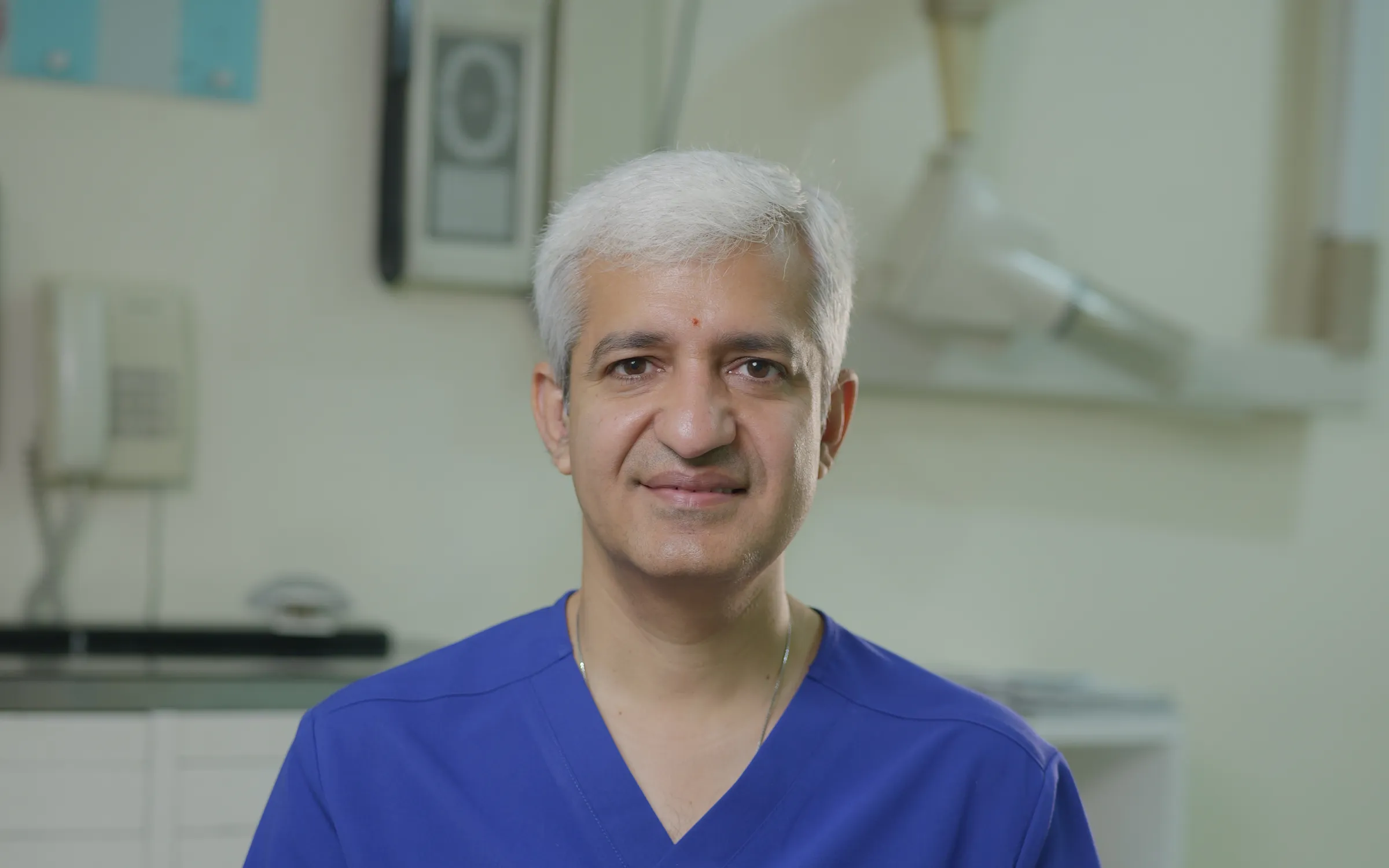
Root canals are a core speciality at Sterling. Treatment is carried out by three endodontists with an MDS in Conservative Dentistry and Endodontics, led by Dr. Tarun Kumar Giroti, and including Dr. Shivangi Kumar Batra, who features in the reel. Many cases are completed in a single sitting under local anaesthesia, with sedation available for anxious patients (sedation dentistry). Most back teeth need a crown afterwards, and a CEREC crown can often be made the same day.
More on how root canals are done at the clinic is on our root canal treatment in Delhi page.
Has a tooth that needed a root canal gone quiet? Book a check at The Sterling Dental Clinic, Vasant Vihar, or send an X-ray on WhatsApp first. At the consultation the tooth is examined and X-rayed, and the dentist explains whether it can be saved and what the treatment involves.
Frequently asked questions
My pain went away. Is the tooth fine?+
Not necessarily. A tooth that stops hurting may have a dead nerve, with the infection still active. An X-ray shows whether it still needs treatment.
How long can I postpone a root canal?+
There is no safe fixed period. It depends on the tooth and the infection. Tell your dentist why you want to wait; often part of the treatment can be done now and the rest later.
Will the tooth heal by itself?+
A nerve that has died does not grow back, and an infection inside the tooth does not clear up on its own.
Can I just take antibiotics again if it hurts?+
Antibiotics may calm a spreading infection, but they do not remove the infected pulp, so the problem tends to come back. Only take them when a dentist or doctor prescribes them.
Is it better to just take the tooth out?+
If the tooth can be saved predictably, keeping it is usually the better long-term choice. If it is cracked down the root or too broken to restore, extraction is the right advice, and your dentist will explain why.
Sources
- NHS: Root canal treatment (accessed 27 November 2026)
- NHS: Dental abscess (accessed 27 November 2026)
- Segura-Egea et al. (2018), European Society of Endodontology position statement: the use of antibiotics in endodontics, Int Endod J 51(1):20–25 (accessed 27 November 2026)
This guide is general information, not a diagnosis or treatment plan. Whether implants suit you, and what they will cost, depends on a clinical examination and 3D scan. Prices are indicative and are confirmed in writing before any treatment.