
It is the right question to ask. Dentists in the UK and Australia regularly warn patients about treatment abroad, and some of their concerns are fair. This guide looks at what the research says about implants themselves, where the real risks lie when you travel, and how to choose a clinic that removes them.
How reliable are dental implants?
Very, in the right hands. A 2019 systematic review and meta-analysis in the Journal of Dentistry estimated that 96.4% of implants survive 10 years, with somewhat lower survival in patients aged 65 and over (Howe et al., 2019).
For full-arch treatment on four implants (All-on-4), a 2026 review of 55 studies reported pooled implant survival of around 98% at five years or more, with mechanical problems such as a loose screw or a chipped tooth in around 6% of cases (systematic review and meta-analysis, 2026). Those are the kinds of small repairs your aftercare plan should cover.
The real risks of having implants abroad
Most problems with implants abroad come from how treatment is organised, not from where it happens:
- Rushed planning. Implants placed without a 3D scan, or on a tight holiday schedule, are more likely to run into trouble.
- Unknown implant brands. If a dentist at home cannot identify the implant, they may not be able to get parts for it.
- No aftercare route. If a crown loosens a year later, you need to know who will look at it.
- Flying too soon. Pressure changes on a flight can cause discomfort after some procedures, especially a sinus lift (Felkai et al., 2023).
- Unclear pricing. A low price that grows once you are in the chair puts pressure on your decisions.
The UK's General Dental Council gives similar advice, and reminds patients that treatment abroad is outside UK regulation (GDC).
A 10-point checklist for choosing a clinic
- Who places the implants? Ask for the surgeon's name, qualification, Dental Council of India registration and implant experience.
- Which implant system? Ask for a recognised, internationally distributed brand, and the details in writing.
- Is there a CBCT scan? A 3D scan is the basis of safe implant planning.
- Is the plan digital? Implant positions should be planned on the scan before surgery.
- Is the quote itemised and written? Implant, abutment, crown, scan and any grafting, listed separately.
- How many trips, and why? A good clinic explains the timeline instead of promising speed.
- Is your medical history reviewed? Diabetes, smoking and some medicines change the plan.
- What records will you leave with? Brand, sizes, batch details and X-rays.
- What is the aftercare plan? Who reviews problems, how, and at what cost.
- Can you speak to them before booking? A video consultation should come before any deposit.
How Sterling answers each point
| Checklist | At Sterling |
|---|---|
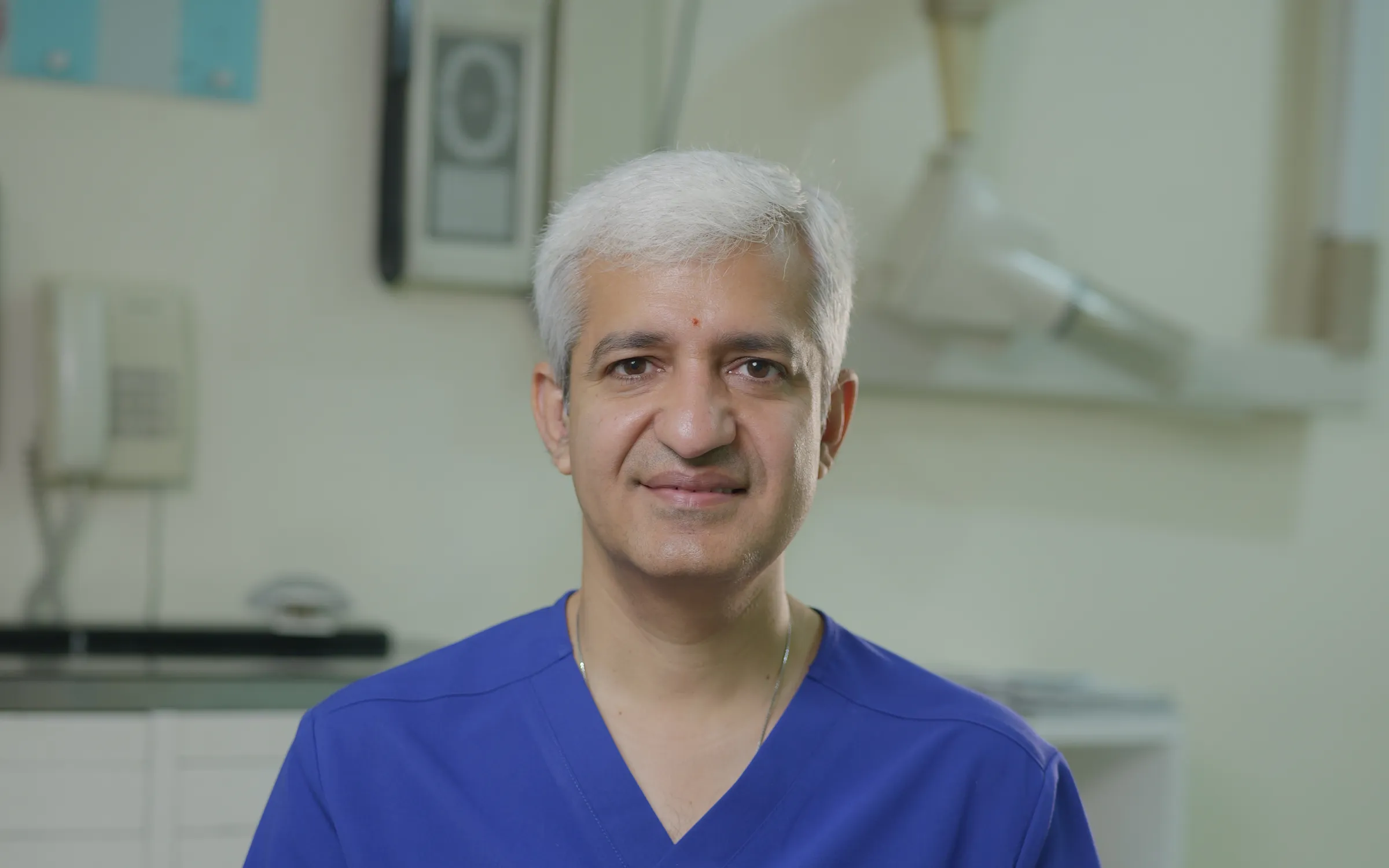
| Surgeon | Implants are led by Dr. Tarun Kumar Giroti, 31+ years in practice, 12,000+ implants as lead surgeon; registration and training on his profile |
| Implant system | Internationally distributed systems; the one used is recorded for you |
| Scan and plan | CBCT 3D scan and digital planning before placement |
| Quote | Itemised and written, after the scan and before treatment |
| Records | System, sizes and X-rays handed over for your dentist at home |
| Aftercare | Remote review of photos and X-rays; your own dentist handles routine check-ups |
If a clinic cannot answer these questions clearly, keep looking. For the full journey, read our guide for international patients.
Frequently asked questions
Is it safe to get dental implants in India?+
It can be. The implants and systems are the same international brands used elsewhere. Safety depends on the clinic: an experienced, registered surgeon, a CBCT scan and digital plan, a recognised implant system, a written quote, and a clear aftercare plan for when you are home.
What is the success rate of dental implants?+
A 2019 systematic review estimated that about 96% of implants survive 10 years. Results vary by patient and case, and no clinic can guarantee an individual outcome.
What happens if something goes wrong after I return home?+
Minor issues such as a loose screw can often be handled by your own dentist, using the implant records you are given. You can also send photos or X-rays to the implant team for review.
How do I check a dentist's registration in India?+
Dentists in India are registered with the Dental Council of India through their state dental council. Ask the clinic for the registration number; at Sterling it is published on each doctor's profile.
Sources
- Howe, Keys & Richards (2019), long-term (10-year) dental implant survival: systematic review and meta-analysis, J Dent 84:9–21 (accessed 28 September 2026)
- All-on-4 vs All-on-6: systematic review and meta-analysis of 55 studies (2026) (accessed 28 September 2026)
- General Dental Council: Going abroad for dental treatment (accessed 28 September 2026)
- Felkai et al. (2023), Dental tourism and the risk of barotrauma and barodontalgia, Br Dent J 234:115–117 (accessed 28 September 2026)
This guide is general information, not a diagnosis or treatment plan. Whether implants suit you, and what they will cost, depends on a clinical examination and 3D scan. Prices are indicative and are confirmed in writing before any treatment.